
Contents

For most supply chain teams, visibility isn’t a new concept.
You can see your assets, some of the time, but not all the time, and you may already have so manual processes in place that do the job.
But what happens to the pallet, crate, tote, roll cage or other reusable packaging once the shipment has been delivered to a customer?
That’s where visibility often breaks down.
Reusable packaging operates in a fundamentally different way to a conventional shipment. The same pallet can move between manufacturers, distribution centers, stores, customers and pooling locations repeatedly, potentially crossing borders and changing hands dozens of times.
More and more organisations are investing in reusable packaging to minimise replacement costs, make their supply chains run more smoothly and to meet new regulations like PPWR in Europe.
If you get notified when a shipment of your products gets delivered, but not where your reusable container goes next, you have a significant visibility gap.
Rising pressure to reduce waste, improve utilization and demonstrate circularity is making accurate reusable packaging data increasingly important.
The EU’s Packaging and Packaging Waste Regulation (PPWR), which applies from August 12, 2026, adds further pressure by establishing requirements around reusable packaging and reuse systems, including information that facilitates tracking and the calculation of trips and rotations.
For businesses managing thousands or millions of reusable containers, supply chain visibility software can help to close that gap and unlock a range of benefits.
57% of supply chain professionals cite a lack of visibility as their top challenge.
Yet, just 6% of businesses say they have full supply chain visibility.
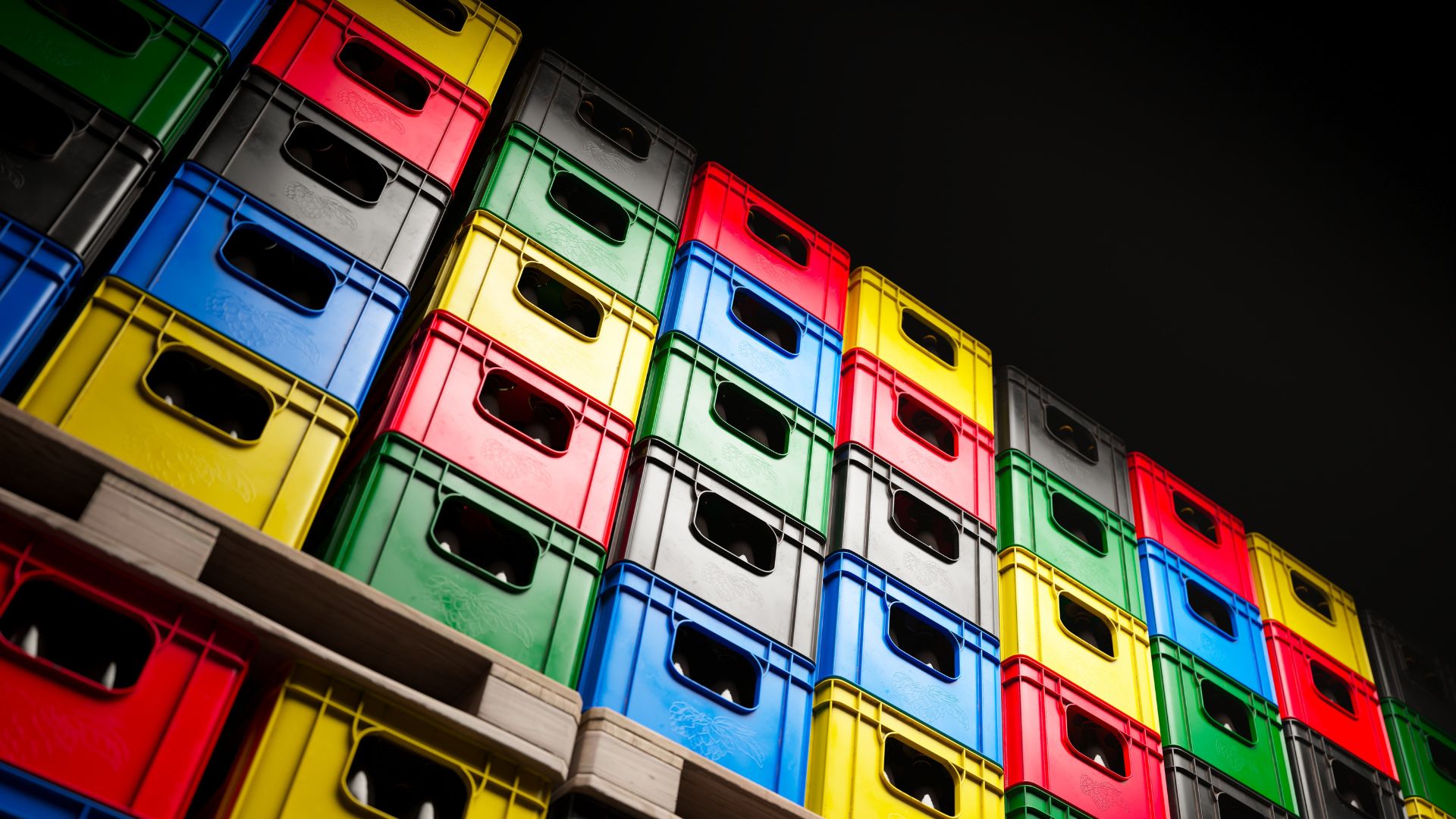
What does supply chain visibility mean for reusable packaging?
Supply chain visibility software traditionally focuses on the movement of products, shipments and inventory.
But for reusable packaging, the container itself needs to be visible throughout its entire lifecycle.
A reusable tote might leave a distribution center full of products, arrive at a retailer, sit there for several days, be emptied, move to another location and eventually return to the original network.
The products have long since been delivered, but the tote is still a valuable container that you don’t want to lose sight of.
To have effective reusable packaging visibility, you need to be able to answer questions such as:
- Where is each container now?
- Which site or customer currently has it?
- How long has it been there?
- How many times has it completed a cycle?
- How long does a typical return take?
- Where is packaging regularly being delayed or lost?
- Which locations are holding more packaging than they need?
- How many containers are actually required to maintain the desired service level?
This is the difference between seeing if a particular shipment was delivered, and where your containers are at all times.
Why are reusable packaging networks uniquely difficult to track?
A supply chain visibility solution designed for reusable packaging gives businesses a view of the physical containers moving around their network, alongside the operational data needed to manage them effectively.
But reusable packaging creates a visibility challenge because it operates across a circular network rather than following a simple journey from origin to destination.
An individual pallet, crate or tote may pass through multiple organizations and locations before returning to the pool. Some of those locations may be controlled by the business. Others may belong to suppliers, retailers, logistics providers or customers.
This makes traditional, more manual visibility approaches difficult to scale.
Containers move beyond your four walls
A warehouse management system can provide excellent visibility while a container is inside a facility. A transportation management system can tell you where a shipment is traveling.
Neither necessarily tells you what happens to the reusable container after delivery.
Once a pallet, roll cage or tote enters a third-party site or another country’s logistics network, visibility can quickly disappear.
Return cycles are unpredictable
Reusable packaging does not simply arrive and immediately return.
It may sit at a customer site, be moved to another location, remain unused for weeks or take a completely different route back into the network.
Without accurate dwell-time and movement data, businesses are often forced to estimate how long packaging takes to return.
Manual scanning does not scale indefinitely
Barcode and RFID-based processes can provide valuable checkpoint information, particularly within controlled environments.
But a distributed reusable packaging network may contain hundreds or thousands of locations. Requiring every site to have the right readers, connectivity, processes and maintenance arrangements can make network-wide visibility difficult and expensive.
The challenge is not necessarily the tracking technology itself. It is extending visibility beyond the locations where you control the infrastructure.
Packaging loss is easy to overlook
A reusable container can be relatively inexpensive individually but extremely valuable as part of a fleet.
Losing one tote may not attract attention. Losing thousands every year creates a significant financial problem, especially if you are losing more expensive reusable assets
For pooling companies, they lose money if:
- they lose assets they have to then replace or
- they may need to buy more containers to win a new contract, because they can’t trust that their existing pool of containers is efficient enough to meet the new demand for its services.
For enterprises,
- applies, but with
- it’s less missing out on commercial opportunities, but having to BUY more containers because they can’t trust the efficiency of their existing operations.

What should supply chain visibility software provide?
For reusable packaging networks, visibility needs to go beyond a pin on a map.
The most useful platforms turn packaging movements into operational information that teams can act on.
Near-real-time packaging location
A supply chain visibility solution should show where reusable packaging as well as containers are moving through the network and provide a current view of inventory across locations.
This makes it easier to identify leakages, monitor movements and understand where packaging is accumulating.
Dwell-time monitoring
Knowing where a pallet is only tells part of the story; knowing how long it has been there is often more valuable.
Dwell-time alerts can highlight containers that have remained at a location longer than expected, helping teams identify potential leakage, bottlenecks or recovery opportunities before they become larger problems. This allows businesses to track which of their distribution sites are underperforming and to take remedial action.
Cycle-time reporting
Reusable packaging exists to be reused.
Understanding how long each cycle takes helps businesses establish realistic operating benchmarks and identify where time is being lost.
If the expected cycle time is four days but actual performance is closer to 14 days, that is important operational information.
Equally, if containers are taking considerably longer than expected to return, visibility can help identify why.
Utilization data
A large fleet does not necessarily mean a well-utilized fleet.
Visibility software can reveal how many totes, crates or pallets are actively circulating, how many are sitting idle and where stock is concentrated.
That creates opportunities to rebalance the network and potentially reduce the number of additional containers required.
Leakage and loss identification
When containers disappear from view, the question is not simply “where are they?”
The more useful question is “where and when did they leave the expected network?”
Historical movement data can help identify recurring leakage hotspots, problematic routes, sites with unusually long dwell times and patterns that would be difficult to spot through manual processes alone.
Audit-ready data
As regulatory requirements around packaging reuse develop, businesses will increasingly need reliable evidence of how reusable packaging systems operate.
Centralized visibility software can provide historical records of movements, locations and rotations, creating a much stronger evidence base than spreadsheets or occasional manual audits.
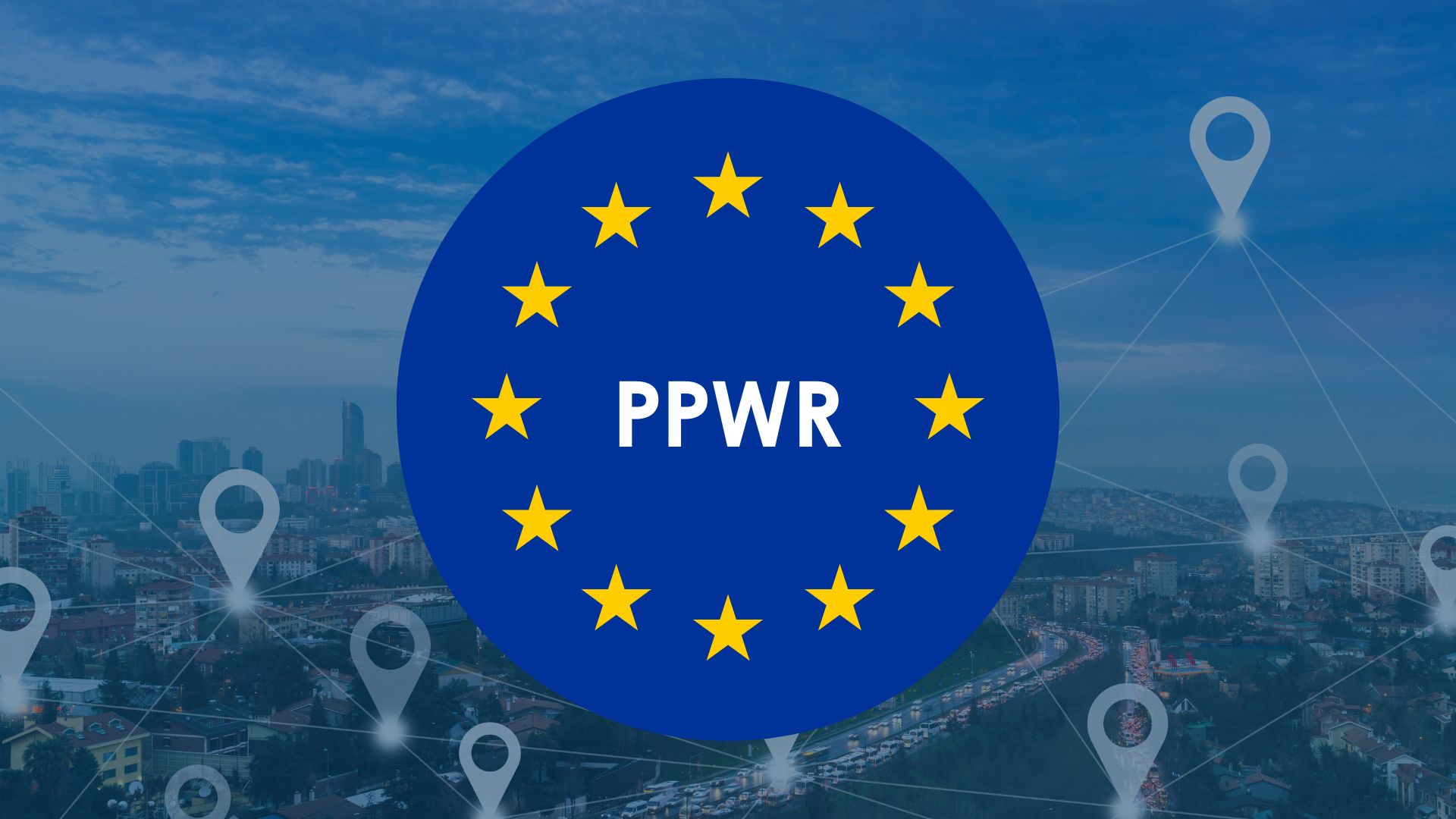
The compliance case: PPWR makes visibility more important
The EU’s Packaging and Packaging Waste Regulation creates an important new driver for reusable packaging visibility.
The PPWR applies from 12 August 2026 and introduces requirements around reusable packaging, including criteria relating to reuse systems and the number of rotations.
The regulation also provides for information about reuse systems and collection points to be made available through a QR code or another standardized, open digital data carrier that facilitates tracking and calculation of trips and rotations.
That does not mean every reusable packaging operator suddenly needs to implement a tracking system on 12 August 2026.
However, it does signal a broader shift: reuse needs to become measurable.
For businesses operating large reusable packaging networks, proving that packaging is genuinely circulating through a reuse system requires reliable data about what happens to those containers after they leave the warehouse.
Visibility software can provide that operational foundation.
As circular economy principles become more embedded in packaging policy and corporate sustainability requirements, organizations operating reusable packaging networks should expect the scrutiny of how those assets are managed, reused and recovered to intensify.

The operational ROI is bigger than compliance
Compliance may create urgency, but it should not be the main reason to invest in visibility.
The commercial case can be just as compelling.
Reduce packaging shrinkage
If reusable packaging is disappearing from the network, knowing where leakage occurs allows recovery efforts to be targeted rather than reactive.
Improve pallet deployment
Better visibility means businesses can see where pallets are sitting and where demand exists, helping them move existing stock more effectively.
Reduce emergency replacement orders
When businesses cannot locate packaging, the default response can be to buy more.
Understanding where existing pallets, roll cages or totes are and why they are not returning can reduce unnecessary replacement expenditure.
Identify underperforming locations
A logistics visibility platform can highlight sites where reusable packaging consistently dwell longer than expected or where return rates are below average.
That gives operations teams a clear starting point for improvement.
Increase utilization
The objective is not simply to own fewer pallets, roll cages or totes. It is to get more value from the containers already in circulation.
Better visibility can help businesses understand how efficiently their fleet is being used and where improvements can be made.
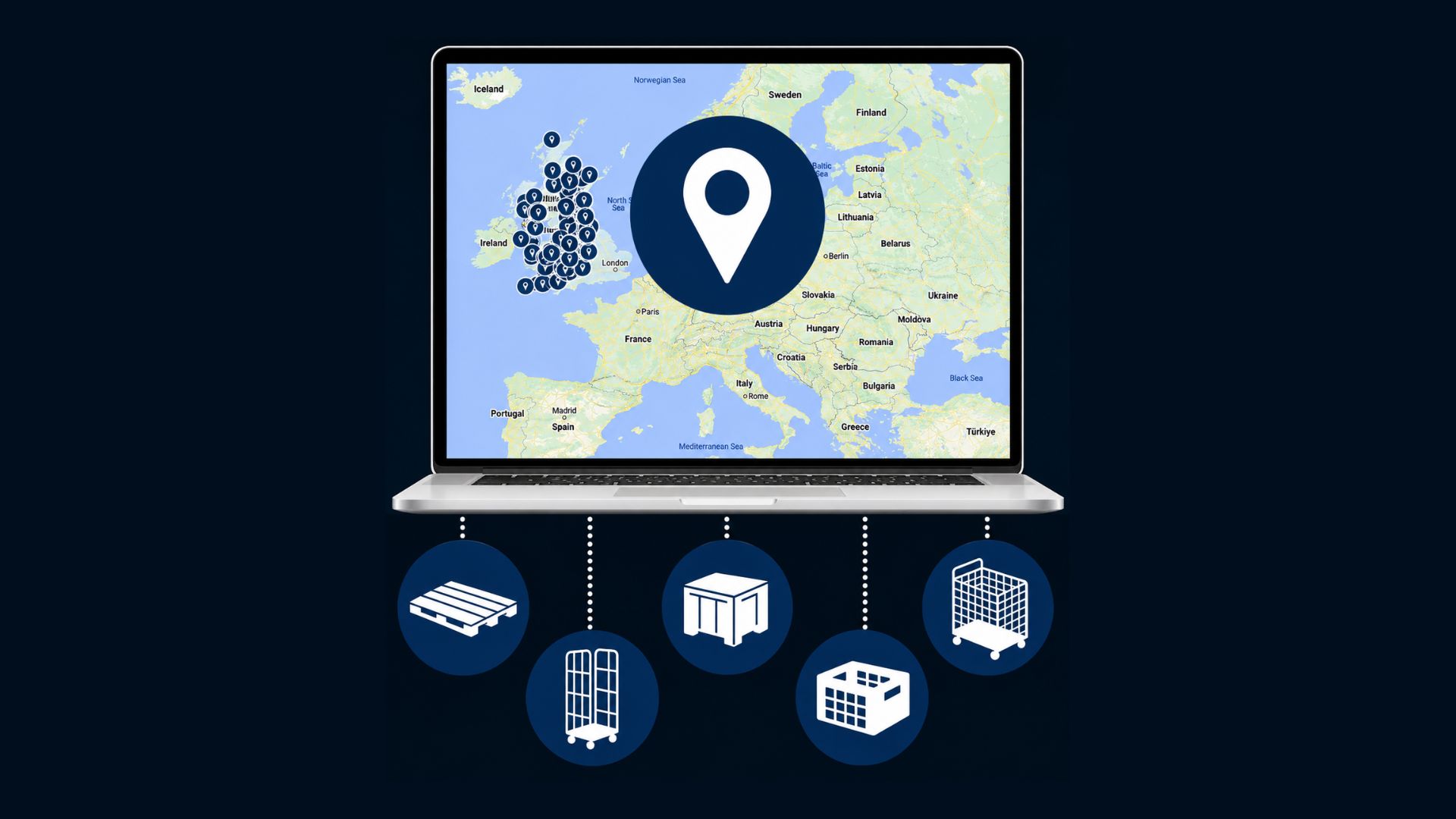
Why infrastructure matters
There is an important practical consideration when choosing a supply chain visibility solution for reusable packaging.
The network does not belong entirely to you.
Your pallets, roll cages or totes may travel through your own warehouses, but they will also spend time at customer sites, supplier facilities, third-party logistics operations, retail stores and open yards.
That makes infrastructure-free deployment particularly important.
Fixed readers can work extremely well in controlled environments where businesses can install and maintain the necessary infrastructure. RFID is also a valuable technology for applications where checkpoint-level visibility is the objective.
But a distributed pooling network presents a different problem.
Installing and maintaining readers across thousands of third-party locations is difficult to justify commercially and operationally.
It can require site access, IT approval, power, connectivity, maintenance and ongoing management.
In other words, the visibility should travel with the pallet, crate or tote.

What to look for in supply chain visibility software
If you are evaluating reusable packaging visibility platform for pallets, roll cages or totes, the key question is whether it can provide useful visibility across your entire network at a commercially viable scale.
Look for:
- Infrastructure-free deployment: Can packaging be tracked without installing readers or access points at every site?
- Wide geographic coverage: Can the system continue providing visibility when packaging cross borders and move between different operators?
- Per-packaging data: Can you understand the history and movement of individual containers, not just shipments or locations?
- Actionable reporting: Can the platform turn location data into information about dwell time, cycle times, utilization and leakage?
- Integration capability: Can visibility data connect with existing ERP, WMS or TMS systems through APIs?
- Scalability: Can the technology remain commercially viable as the number of tracked reusable packaging increases from thousands to hundreds of thousands or millions?
- Long life: Can trackers remain in service for a significant proportion of the reusable container’s lifecycle without creating excessive maintenance requirements?
These considerations matter because reusable packaging visibility is not a one-off tracking project.
It is an ongoing layer of intelligence across a circular supply chain.

From shipment visibility to reusable packaging visibility
Most businesses have already invested heavily in supply chain visibility.
The next step is to apply that same thinking to the packaging that make the supply chain possible.
A pallet, crate, tote or roll cage does not stop being valuable when its contents have been delivered. It becomes part of the next cycle.
If you cannot see that cycle, you cannot properly measure it, optimize it or protect the container.
Supply chain visibility software designed around reusable packaging closes that gap.
It provides the data needed to reduce losses, improve utilization, understand return cycles and make better decisions about the items already circulating through the network.
And as reusable packaging becomes increasingly important to both commercial and sustainability strategies, that visibility is becoming less of a nice-to-have and more of an operational necessity.
Make every reusable tote, crate or pallet visible
Sensize provides infrastructure-free visibility across reusable packaging networks of any scale, helping businesses track, manage and optimize pallets, crates, totes, roll cages and other reusable load carriers.
If you want to understand where your reusable containers are, how they are being used and where your network can perform better, get in touch with Sensize to arrange a demo.
