
For most of the past century, logistics companies have been judged by their ability to move physical objects rather than digital bits.
Investors valued fleets, depots and container pools much like railways or shipping lines: capital intensive, operationally complex and with structurally low margins.
Efficiency mattered, but it was mechanical efficiency, not digital leverage, that moved the dial.
That assumption is now changing.
With over 12,000,000,000 returnable assets in circulation, a quiet shift is underway as logistics firms digitize their physical networks and protect their assets.
In capital markets, the consequences are clear. Companies positioning themselves as digital logistics platforms are attracting higher valuations than analog peers.
The reason is straightforward: investors reward scalable, data-driven business models more generously than asset-heavy operators dependent primarily on utilization and cost control.
Digitization, in short, is a driver of enterprise value.

The valuation gap between analog and digitally-enabled reusable container pooling
Growth in traditional logistics requires more pallets, more trucks, more depots and more labor. Returns scale with capital deployed.
Digitally-enabled logistics scales differently. Once infrastructure for capturing and analyzing data is in place, incremental growth becomes less capital intensive and more margin accretive. Recurring digital revenues and proprietary datasets create room for growth.
Investors distinguish between infrastructure businesses and technology platforms. The former offer stable cash flow. The latter offer scalability and long-lasting competitive advantage from data assets.
Logistics firms that embed digital visibility into their operations can combine both characteristics. This is particularly relevant in sectors such as reusable container pooling, where large fleets of shared assets move continuously between manufacturers, retailers and distribution networks.
Why container pooling needs connected devices
But digitization in logistics faces a practical constraint: most supply chains lack reliable primary data about physical assets.
Enterprise systems track orders and invoices with precision. They are far less certain about where a pallet actually is, how long it has been idle or whether a shipment met temperature requirements. Digitization begins on the pallet.
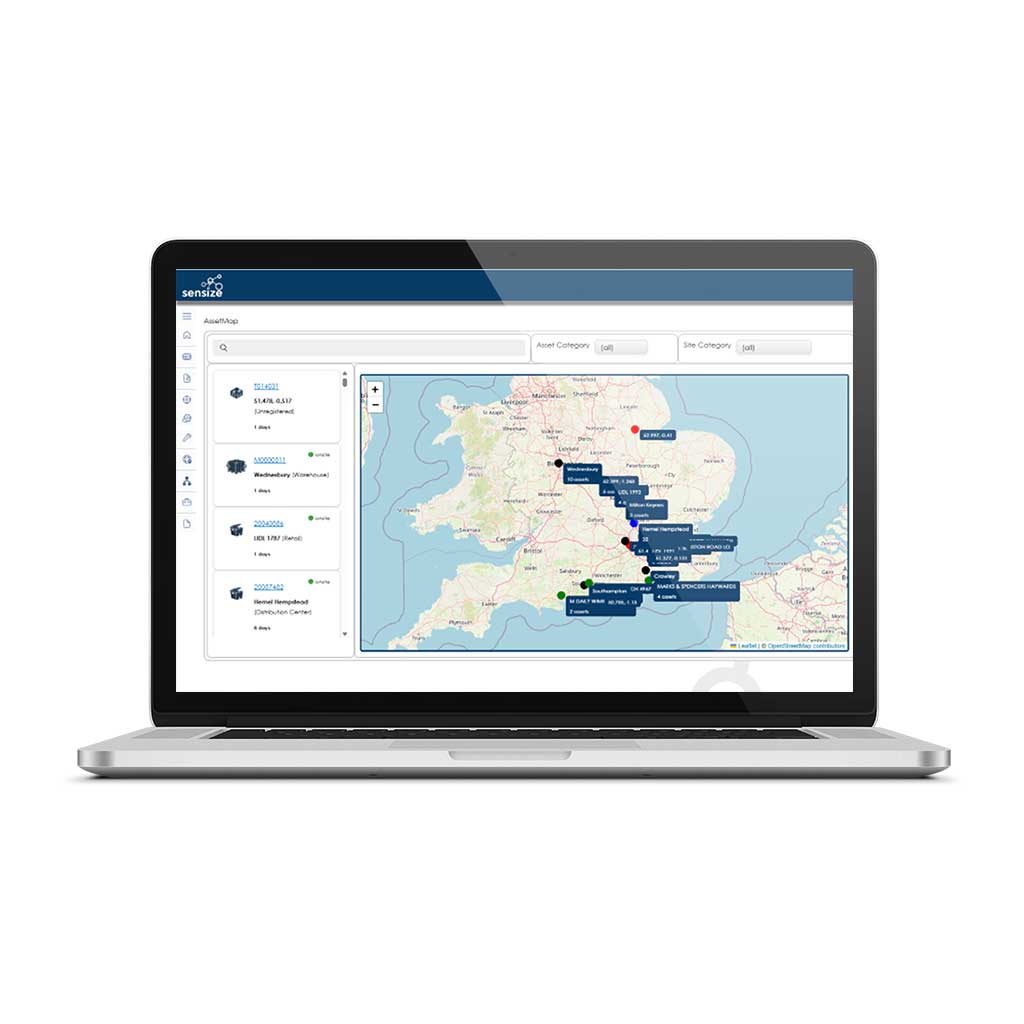
Asset tracking provides generates the fundamental data needed to digitize the supply chain. By instrumenting pallets, roll cages, totes and containers with connected devices, logistics firms turn physical flows into data.
For container pooling networks, this visibility is particularly valuable. Pooling companies manage millions of reusable assets moving across complex supply chains. Without accurate tracking, losses, delays and imbalances accumulate quickly.
Container tracking and scalable tracking for pooling companies
Recent innovations have made large-scale asset tracking economically viable.
Rather than equipping every asset with an expensive cellular connection, hierarchical “parent/child” architectures allow a smaller number of connected parent devices to collect data from larger populations of low-cost child trackers via short-range wireless links. The parents transmit aggregated data to the cloud, dramatically reducing connectivity costs.
This approach makes container tracking and pallet tracking financially practical across entire fleets rather than only high-value shipments. For pooling companies operating large asset networks, scalable tracking unlocks visibility that was previously too expensive to achieve.

How does reusable container tracking improves efficiency in container pooling?
The immediate impact of asset tracking is operational.
Tracking data reduces losses, shortens cycle times, balances inventory, and eliminates manual reconciliation. Even small improvements in utilization can deliver substantial savings for operators managing millions of assets, including pallet pooling and container pooling providers.
Shared visibility also reduces friction between companies. Disputes over asset ownership decline. Billing becomes more accurate. Retailers and manufacturers gain confidence in asset availability across pooling networks.
For pooling companies, better container tracking and pallet tracking translate directly into lower operating costs and improved service reliability.
Digitization lowers transaction costs across fragmented supply chains.

From container tracking to data platforms in pooling networks
Once data is captured at scale, the opportunity expands beyond operational efficiency.
Historical movement patterns enable predictive modelling and AI-driven optimization. Connected assets can support additional services including cold chain monitoring, inventory intelligence, promotion compliance and ESG reporting.
In a digitized pooling network, containers cease to be passive infrastructure and become data-generating nodes within a wider supply chain platform.
As services accumulate, logistics providers, particularly with container pooling networks, begin to resemble technology platforms. Recurring software revenues emerge alongside traditional rental income. Switching costs rise. Margins expand. Higher valuations follow.
Why tracking for pooling companies is becoming a strategic necessity
Capital markets reward growth potential, scalable operating leverage and defensible data assets.
Tracking technology allows container poolers and other logistics firms to offer all three.
Ownership of the physical containers is no longer sufficient. Ownership of the data flowing through them creates strategic leverage.
For pallet pooling and reusable container pooling operators, tracking technology is becoming the foundation of that data layer.
In the modern day, tracking for pooling companies is a strategic capability that enables new services, enhanced asset management and stronger customer relationships.
With over 53% of pallet pooling transactions using automated tracking platforms, it’s clear that this shift is already in play. If poolers want to gain greater insights over their assets, it’s crucial that this trend continues.
Asset tracking is the central nervous system of the modern supply chain, the mechanism through which physical commerce becomes digitally intelligible.
In logistics, digitization does not begin with software. It begins with knowing where things are.
