
These colorful crates, one of the earliest examples of high-quality plastic secondary packaging, have been protecting their precious cargo of Hefeweizen, Helles and Dunkel since the 1960s.
Many individual crates have been in continuous use for 30 years, surviving 1000s of trips from the breweries to drinkers and back.
The business case for these long-lived crates obvious, so why do we still see ugly cardboard secondary packaging everywhere?
It turns out beer is a special case. In the beer supplychain it is relatively easy to find and collect empty crates. For other products the supply chain is more complex, making it harder to manage reusable assets without losses. This makes disposable cardboard more attractive and popular than it should be.
For these markets making the case for reusable containers isn’t simply about choosing the right container, it’s about making them smarter with tracking technology.
This is the only way to guarantee efficient collection and reuse. The good news is that the same sophisticated tracking technology provides many other benefits.
You gain near-real-time insight and control across your supply chain, slashing waste, labor costs, leakage and inefficiency
In this article, we share the most effective ways you can lower the TCO of reusable plastic packaging and explore how our proprietary Sensize Tracking System can support this in your supply chain.
The potential cost of NOT tracking plastic packaging
Our research shows that, without tracking, a typical container fleet will lose around 20% of its containers per year.
This varies from case to case. One customer was losing a shocking 50% of its magnum boxes. Lay four of these side-by-side and they’re around the size of a Volkswagen Golf. Believe it or not, tens of thousands go missing each year.
Using a tracking system allowed them to identify the location of these missing assets and determine the best way to recover them or, when recovery is impossible, issue an invoice for the cost of the missing asset.
How tracking reduces the Total Cost of Ownership (TCO) of plastic packaging
Enhanced supply chain visibility
Tracking your packaging gives you full visibility at every stage:
- Know where assets are, in near-real-time
- Spot slow cycles or missing containers before they become costly problems
- Improve forecasting and stock levels with accurate, actionable data
This level of insight helps eliminate blind spots that traditionally add up.
Optimized use and availability
With tracking, you can:
- Ensure packaging is allocated where it’s needed most
- Reduce buffer stock and excess inventory costs
- Avoid last-minute replacements for leaked assets
Better utilization means fewer unnecessary containers in circulation and less tied-up capital.
Reduced labor and administration costs
Automated tracking replaces manual checks, reducing the need for:
- Pen-and-paper processes
- Time-intensive inventory audits
- Manual reconciliation of shipments and returns
This frees up staff and cuts labor costs.
Reduce losses, theft and damage
Returnable packaging isn’t reusable if it gets leaked or damaged.
Tracking minimizes:
- Leakage and theft across the supply chain
- Disruptions due to misplaced assets
- Costs associated with emergency replacements
Proactive maintenance and repairs
Rather than react to costly breakdowns:
- Identify assets needing attention early
- Schedule maintenance before failures occur
- Extend asset life and reduce replacement costs
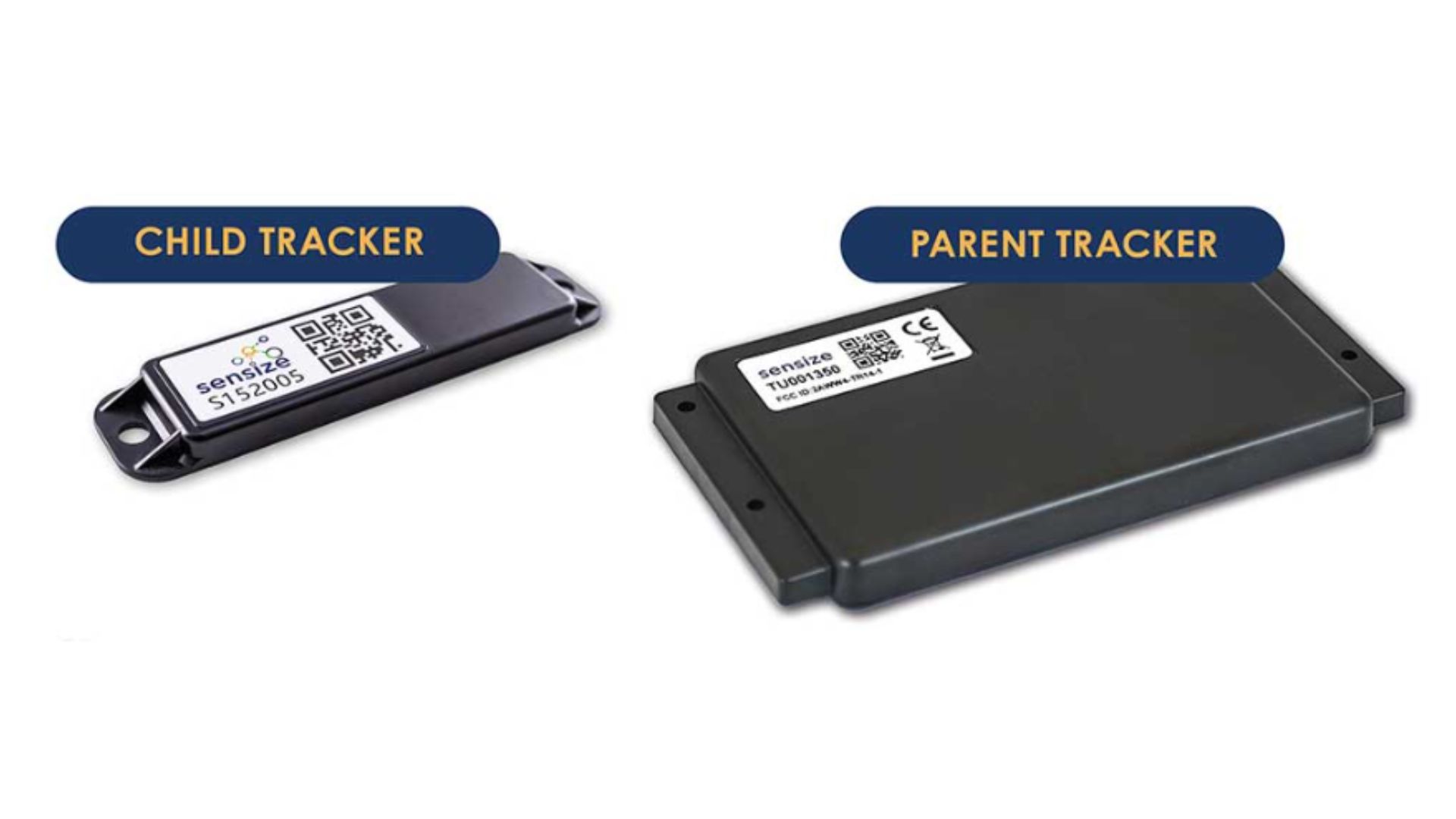
How the Sensize Tracking System helps
Sensize offers a tailored tracking solution built for reusable containers that dramatically reduces TCO.
Parent/Child tracking architecture
Sensize’s proprietary Parent/Child system combines a small number of GPS-enabled “parent” trackers with low-cost Bluetooth “child” sensors to deliver coverage across your fleet at a fraction of the cost of traditional tracking.
The parent devices relay data from child trackers throughout the supply chain without needing fixed infrastructure.
