
Contents
The Packaging and Packaging Waste Regulation (PPWR) is set to reshape how businesses across Europe design, use and manage packaging, entering into force on 12 August 2026.
As the regulation places greater emphasis on reducing waste and increasing reuse of assets, organizations will need to look beyond just packaging materials and consider how their actual packaging performs throughout its entire lifecycle.
For many businesses, compliance with PPWR will depend on having greater visibility of their reusable packaging and returnable transport items. Knowing where assets are, how often they are reused and where losses occur will become more important as companies work to meet new sustainability and reporting requirements.
In this article, we’ll explain what PPWR is, who it affects and what businesses can do to prepare. We’ll also explore why asset tracking and supply chain visibility is becoming essential for managing reusable packaging efficiently and supporting long-term compliance with PPWR.

What is PPWR and why does it matter?
PPWR is a major shift in how businesses across Europe approach packaging management, sustainability, and reporting.
Replacing the previous Packaging and Packaging Waste Directive, adopted in 1994, PPWR introduces stricter requirements around packaging reduction, recyclability, reuse targets, and transparency across the entire packaging lifecycle.
The EU generated 79.7 million tonnes of packaging waste in 2023, equivalent to 177.8 kg (392 lbs) per person, highlighting the scale of the packaging waste challenge PPWR is designed to address.
Businesses will need greater visibility into how those assets move through their supply chains, how often they are reused, and whether they are being managed effectively.
Who does PPWR affect?
PPWR applies to businesses that place packaging on the European market, meaning its impact extends far beyond packaging manufacturers.
The regulation affects a wide range of industries, including:
- Retailers managing reusable packaging systems
- Manufacturers using transport packaging
- Logistics providers managing returnable assets
- Food and beverage businesses
- FMCG companies
- Packaging producers and suppliers
- Pooling providers operating shared packaging fleets
Any business involved in packaging creation, distribution, use, recovery, or reuse will need to understand how PPWR affects their operations.
For companies operating complex supply chains, one of the key challenges is proving that packaging is being managed correctly throughout its entire lifecycle.
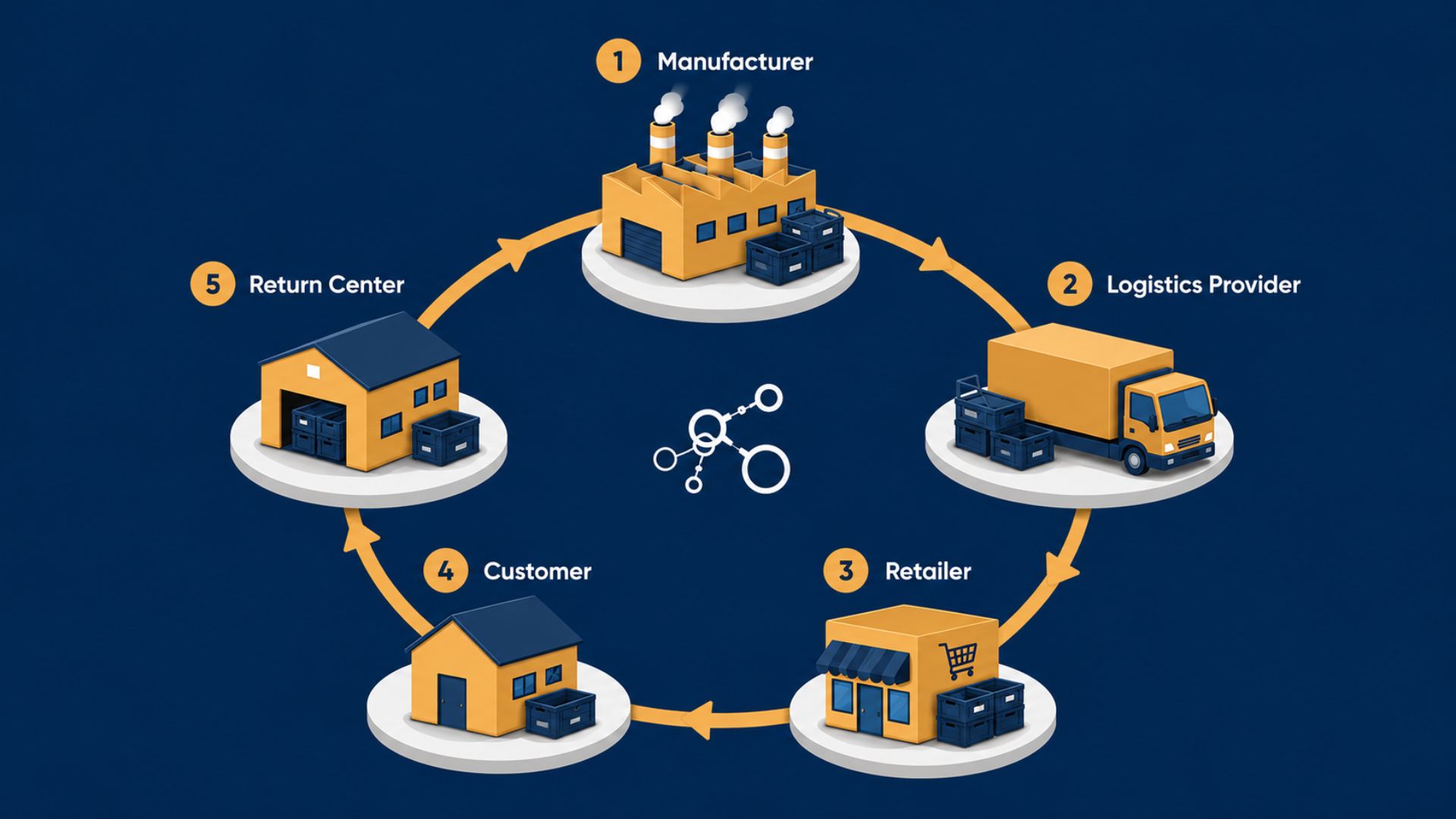
Reusable packaging systems rely on assets moving between multiple locations such as manufacturers, distribution centers, stores, customers and return points.
Without accurate visibility, businesses can struggle to answer important compliance questions:
- Where is each reusable asset?
- How many times has it been reused?
- How long does it remain in circulation?
- Where are losses occurring?
- Are reuse targets being achieved?
These questions highlight why supply chain visibility is becoming a critical part of PPWR compliance.
PPWR Timeline
Packaging and Packaging Waste Directive introduced
PPWR formally adopted
PPWR enters into force
PPWR becomes applicable
First major compliance milestones
Packaging waste reduction target increases
Long-term PPWR target
What does PPWR mean for reusable packaging?
One of the biggest areas of focus within PPWR is encouraging businesses to reduce single-use packaging and increase reuse.
Reusable packaging can help organizations reduce waste and improve sustainability performance, but only when the system behind it works effectively.
A reusable container, pallet, crate or transport item only delivers value when it is:
- Returned after use
- Available when needed
- Used multiple times
- Properly maintained
- Accounted for throughout its journey
Without visibility, reusable packaging can quickly become lost, underutilized, or unnecessarily replaced.
For many businesses, this creates a significant operational challenge. They may know how many assets they own, but they do not know where those assets are at any given moment or how efficiently they are being used.
This lack of visibility can lead to:
- Increased packaging costs
- Higher replacement rates
- Inefficient pooling operations
- Reduced reuse performance
- Difficulty proving compliance
In many cases, packaging placed on the EU market will also require supporting technical documentation and a Declaration of Conformity demonstrating that it complies with the regulation’s sustainability, labeling and substance requirements.
Maintaining accurate records of reusable assets and their movement can help businesses build the evidence needed to support compliance.

Why asset tracking is becoming essential for PPWR compliance
To meet PPWR requirements, businesses need reliable data about their reusable packaging networks.
Traditional approaches often rely on manual processes, spreadsheets, barcode scanning or periodic checks. While these methods may work for smaller operations, they become increasingly difficult to manage as supply chains become more complex.
Modern asset tracking solutions provide near-real-time visibility into reusable packaging movements, helping businesses understand:
- Asset location
- Asset utilization
- Return cycles
- Loss points
- Movement patterns
- Supply chain inefficiencies
This information allows organizations to make better decisions, improve packaging circulation and demonstrate measurable progress toward sustainability goals.
Improving supply chain visibility
End-to-end supply chain visibility is becoming increasingly important as businesses look to comply with new sustainability regulations.
With near-real-time asset tracking, organizations can gain a clearer picture of their reusable packaging networks and identify areas for improvement.
For example, businesses can:
- Recover lost pallets and containers
- Reduce unnecessary replacements
- Improve turnaround times
- Optimize inventory levels
- Identify bottlenecks in return processes
Rather than simply knowing how many assets exist, businesses can understand how those assets perform.
Supporting reusable packaging management
Effective reusable packaging management requires more than tracking individual assets.
Businesses also need to understand relationships between assets, locations, users, and supply chain partners.
This is particularly important for organizations managing large fleets of returnable transport items (RTIs), pallets, containers and crates.
A strong asset tracking system can help businesses create a digital record of each asset and build a complete picture of its journey.
How Sensize helps businesses prepare for PPWR
Sensize helps businesses improve reusable packaging visibility through our proprietary Parent/Child asset tracking system.
Unlike traditional tracking approaches that require every individual item to have expensive hardware installed, Sensize’s technology creates a connected network where every asset in a fleet can be tracked efficiently at scale.
“Switching to reusable packaging isn’t the finish line, it’s the starting point. To make reuse work under PPWR, businesses need actual data to prove assets are being used efficiently, recovered consistently and managed throughout their lifecycle. Visibility is what turns good intentions into measurable compliance.”
Luke D’Arcy, Director, Sensize
What is Parent/Child asset tracking?
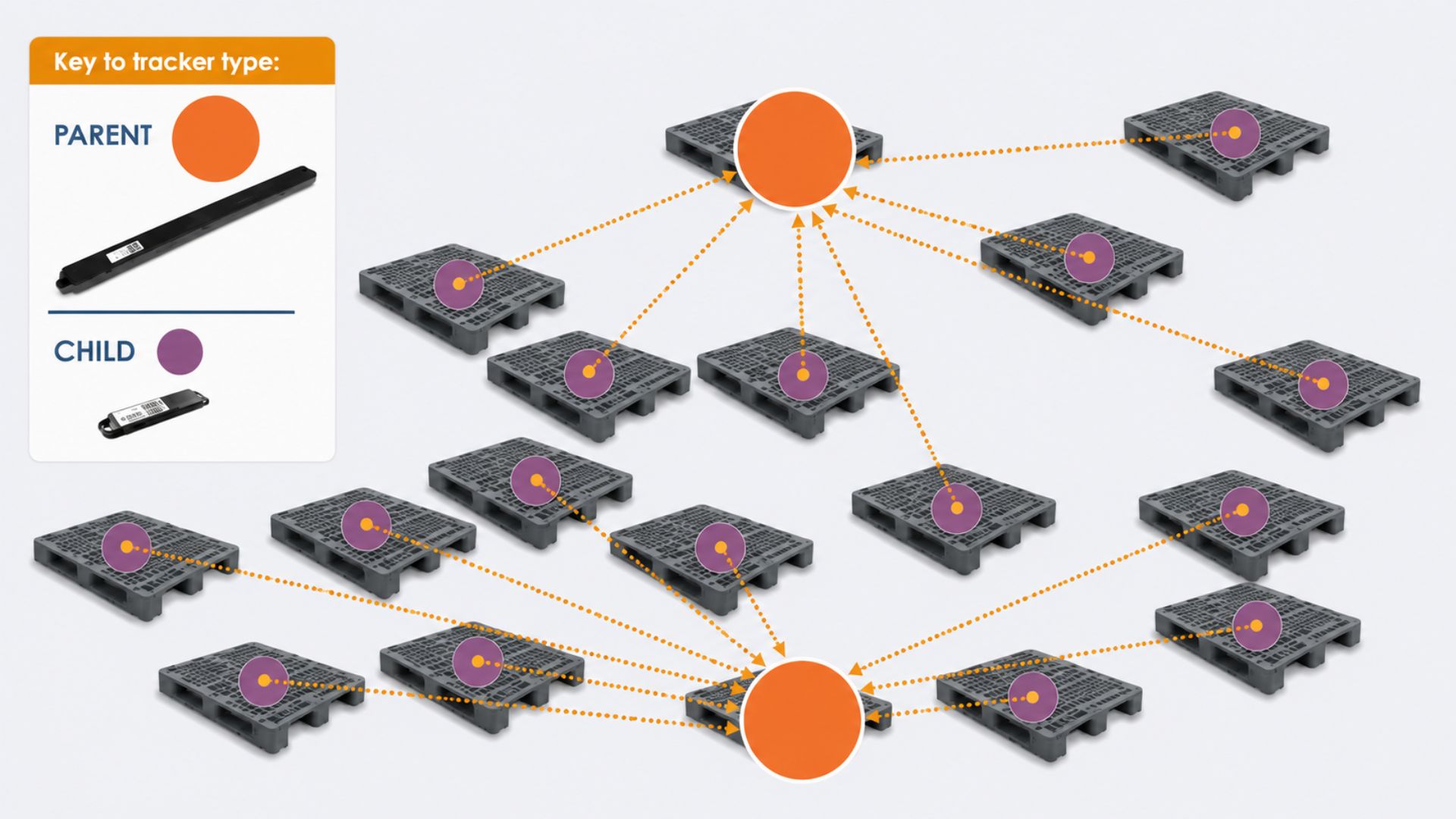
Our tracking system uses two types of tracker: ‘parent’ and ‘child’.
‘Parent’ trackers transmit data directly to the Sensize platform using the LTE cellular network.
‘Child’ trackers send their data to nearby parent trackers via Bluetooth, which relay it to the platform.
In effect, parent trackers act as wireless hotspots for the children, providing a gateway for their data.
When an asset with a parent tracker moves through the supply chain, businesses gain visibility into the connected child assets nearby without needing every item to have its own LTE tracker.
What’s more, this system doesn’t require on-site infrastructure, with parents transmitting over cellular.
This provides a cost-effective and scalable approach for businesses managing large reusable packaging networks.
How our asset tracking gives you full visibility
Sensize’s asset tracking platform helps businesses understand what is happening across their reusable packaging ecosystem.
By combining IoT asset tracking technology with intelligent data management, organizations can gain insight into:
- Asset location
- Movement history
- Usage patterns
- Return cycles
- Loss events
This enables businesses to move from reactive asset management to proactive supply chain optimization.
Instead of discovering assets are missing after they have already been lost, teams can identify issues earlier and take action.

Turning PPWR compliance into a business opportunity
While PPWR introduces new requirements, it also creates an opportunity for businesses to improve efficiency and reduce unnecessary costs.
Better reusable packaging visibility can help organizations:
- Reduce packaging waste
- Increase asset utilization
- Improve operational efficiency
- Strengthen sustainability reporting
- Reduce supply chain costs
The businesses that succeed will be those that treat compliance as more than a regulatory obligation and use it as an opportunity to create smarter, more connected supply chains.

Conclusion
PPWR will require businesses to have a stronger understanding of how packaging moves through their operations.
For organizations managing reusable packaging, visibility will be critical.
By combining accurate tracking data, improved asset management processes, and near-real-time supply chain insights, businesses can build more efficient circular packaging systems while supporting compliance requirements.
Sensize’s Parent/Child asset tracking system provides a scalable way for businesses to track reusable assets, reduce losses, and create the supply chain visibility needed for the future of packaging management.
Want to understand how your reusable packaging network could benefit from greater visibility? Book a free demo and see how asset tracking can support your PPWR compliance strategy.
PPWR FAQs
